Rudyard Kipling"
“When you're left wounded on Afganistan's plains and
the women come out to cut up what remains, Just roll to your rifle
and blow out your brains,
And go to your God like a soldier”
General Douglas MacArthur"
“We are not retreating. We are advancing in another direction.”
“It is fatal to enter any war without the will to win it.” “Old soldiers never die; they just fade away.
“The soldier, above all other people, prays for peace, for he must suffer and be the deepest wounds and scars of war.”
“May God have mercy upon my enemies, because I won't .” “The object of war is not to die for your country but to make the other bastard die for his.
“Nobody ever defended, there is only attack and attack and attack some more.
“It is foolish and wrong to mourn the men who died. Rather we should thank God that such men lived.
The Soldier stood and faced God
Which must always come to pass
He hoped his shoes were shining
Just as bright as his brass
"Step forward you Soldier,
How shall I deal with you?
Have you always turned the other cheek?
To My Church have you been true?"
"No, Lord, I guess I ain't
Because those of us who carry guns
Can't always be a saint."
I've had to work on Sundays
And at times my talk was tough,
And sometimes I've been violent,
Because the world is awfully rough.
But, I never took a penny
That wasn't mine to keep.
Though I worked a lot of overtime
When the bills got just too steep,
The Soldier squared his shoulders and said
And I never passed a cry for help
Though at times I shook with fear,
And sometimes, God forgive me,
I've wept unmanly tears.
I know I don't deserve a place
Among the people here.
They never wanted me around
Except to calm their fears.
If you've a place for me here,
Lord, It needn't be so grand,
I never expected or had too much,
But if you don't, I'll understand."
There was silence all around the throne
Where the saints had often trod
As the Soldier waited quietly,
For the judgment of his God.
"Step forward now, you Soldier,
You've borne your burden well.
Walk peacefully on Heaven's streets,
You've done your time in Hell."
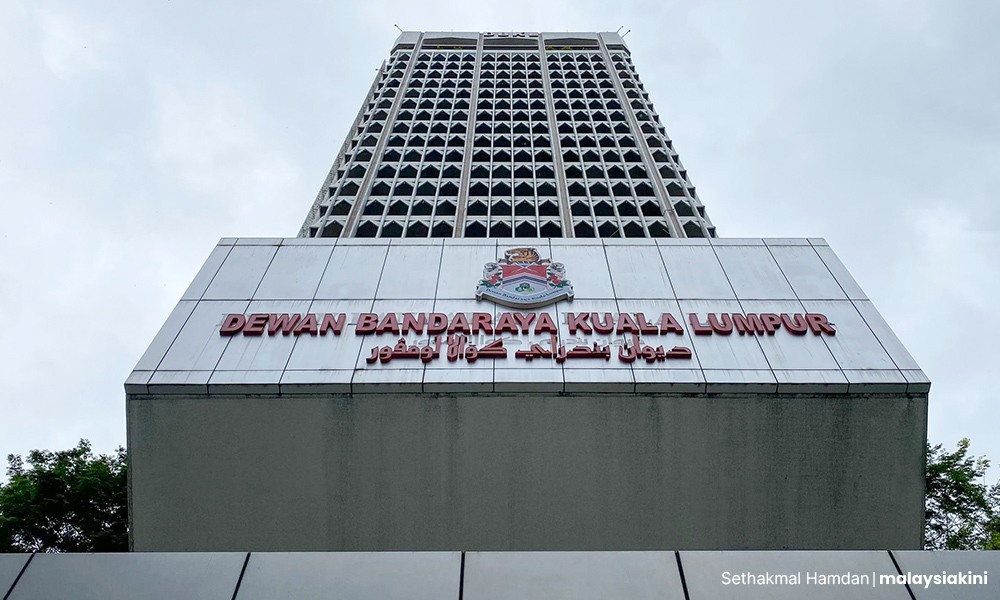
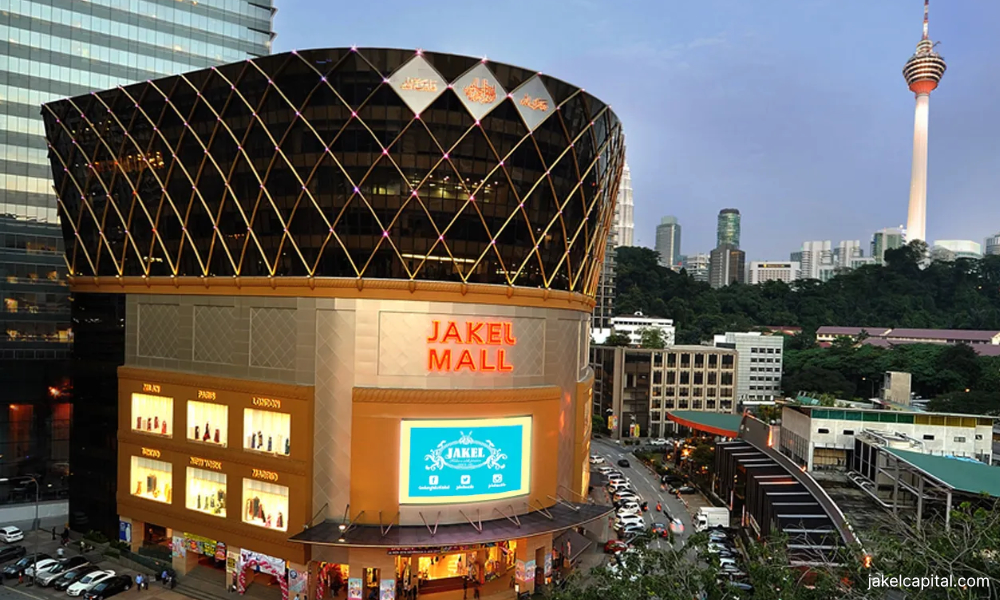
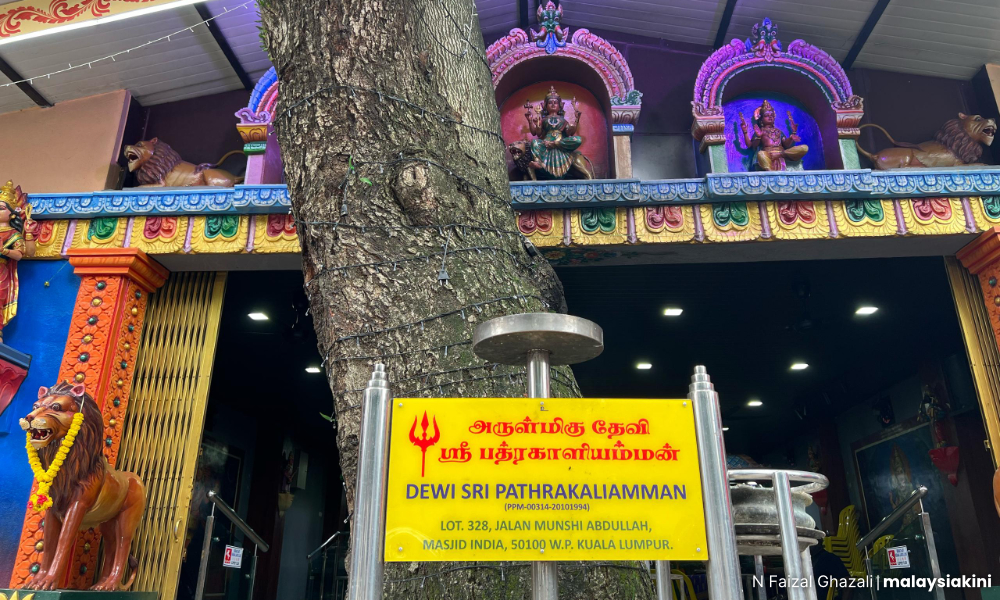
Dewi Sri Pathrakaliamman Temple committee’s lawyers are setting the record straight on issues related to its plot of land.
These include claims that the temple is “trespassing” and has profited off the commercially valuable land.
Lawyers
representing the Dewi Sri Pathrakaliamman Temple committee have moved
to “set the record straight” on issues related to the plot of land along
Jalan Munshi Abdullah, Kuala Lumpur.
Former
Malaysian Bar president Ambiga Sreenevasan and Lawyers for Liberty
co-founder N Surendran noted that allegations and counter-allegations
against the temple remain despite the recently concluded Madani Mosque groundbreaking ceremony that marked a resolution reached between all parties.
The duo said the allegations had given an erroneous impression of the status and legal rights of the temple. The allegations are set out below and answered in turn.
(a) The temple is ‘haram’
This is plainly wrong and disregards the entire historical background and circumstances of the temple in that location.
The
temple was built long before Merdeka and remained in substantially the
same location, despite some rebuilding in 2008 under the Kuala Lumpur
City Hall’s (DBKL) instructions to allow for an access road to be made.
Those
extensive renovations were carried out with the knowledge and consent
of DBKL, which proves that the temple was never “haram”, but was always
recognised by the authorities as legitimate. Furthermore, given the history, the legal position is not as simple or simplistic as it is made out to be.
When
Jakel Trading Sdn Bhd bought the land in 2014, it was subject to the
rights of the temple situated on the land. This is why we had earlier
asked for the sale and purchase agreement between Jakel and DBKL to be disclosed.
The
legal position is that rights have been acquired by and subsist in the
temple by equity and estoppel. Hence, it is plainly wrong to suggest
that the temple is not legal or has inferior rights as compared to the
new land owner, who came in a mere 10 years ago.
Had the matter
proceeded to court, those legal issues and the issues arising under the
National Heritage Act 2005 and other legislation would have been
presented and vigorously argued on behalf of the temple. Further, the court would have scrutinised the Jakel sale and purchase agreement to resolve the competing rights and interests.
Such
an examination was undertaken in the landmark Taman Rimba case, where
the Federal Court examined the history of the case and found that the
mayor’s involvement in the sale of the land to the purchasing party, and
yet later granting a development order to the purchaser, was indeed a
conflict of interest.
Similar issues would have arisen in this
case if it had gone to court, which demonstrates that the legal position
goes far deeper than has been portrayed and poses serious questions.
(b) The temple had a windfall due to the land’s market value
The
temple had its beginnings in the area in the 1890s, when the land was
not registered to anyone and was of little economic value. To now value
the land at the current market value and pronounce it as an exorbitant
gain to the temple is malicious and ill-intentioned.
Assessing the
land by value per square foot is quite meaningless as it is a place of
worship, not a commercial investment. Further, the government has
affirmed that the new land will be gazetted as a place of worship, which
means by law it cannot be sold for profit.
(c) The temple is a trespasser
It has been repeatedly said that the temple is a “penceroboh” or trespasser, and is now being rewarded with land despite its own “wrongdoing”.
A
trespasser is a person who enters someone’s land without consent. How
can the temple be dubbed a “trespasser” when they were on the land
first, long before anyone else? Long before Malaysia was even formed or
DBKL or Jakel had even existed?
d) The temple unreasonably insisted on staying to get valuable new land
The
issue that ultimately arose was not of the temple’s making. It was
always the temple’s wish to remain at the present site and welcome the
new mosque as its near neighbour.
However, matters were
precipitated by a letter dated Feb 21, 2025, from DBKL, giving the
temple committee three days to agree to move to an alternative site,
which was far away from the Masjid India area and the large community of
worshippers the temple served.
Accepting an unsuitable site would
have removed all traces of the historical presence of the temple in the
Masjid India locality. It would have been the obliteration of a piece
of Malaysian religious and cultural history and the extinguishment of a
key facet of the multicultural make-up of Masjid India. Other sites
offered had to be rejected due to fundamental unsuitability.
The
new site, 50m away from the current location, was accepted by the temple
on March 25, 2025, as it would remain among the community there and, to
some extent, maintain the ethos and history of the temple.
We
trust that the clarification we have provided will make clear some of
the legal issues that arise in a case like this and will stop the
misguided polemics that have multiplied around this issue.
OCT : Anwar is a seasoned politician who knows what to say to win votes even though his statements and speeches are half truth. Just look at his statements. He painted the temple is in the wrong, illegal and he is basing his decision by following the rule of law.
Anwar doesn't even bother to find out how the land was sold by DBKL without a discussion with the temple committee members. Anwar thought on this DBKL decision was irrelevant. Anwar won't back down but double down that he will be launching the mosque groundbreaking ceremony come what may.
In the eyes of MM, Anwar is defending 2R. Who cares about NM feelings, custom and/religion!!! NM don't and cannot decide Anwar's fate as PM but MM does. What Anwar was politically correct. Anwar is selfish, deceitful and arrogant but that is how politicians work. Self interest first. Rakyat dies or lives is just collateral damages. Anwar has to be PM forever else he would be like exPM like TSMY & IS.
At the end of the day, karma will dictate. Nobody can escape karma one way or another.
Prime Minister Anwar Ibrahim lauds the construction of the Madani Mosque in Masjid India, calling it a “victory”.
He
also credits ministers and agencies involved in the negotiations,
adding that they demonstrated the wisdom, strength, and nobility of
Islam.
Anwar also took some time to meet the Dewi Sri
Pathrakaliamman Temple committee chairperson briefly after performing
the symbolic groundbreaking ceremony of the proposed mosque.
Prime
Minister Anwar Ibrahim has described a planned construction of the
Madani Mosque at the heart of Masjid India, as a “victory” after a
decade of stalled development.
Rakyat Tertindas : I am an Indian and I swear I will never ever vote for this Anwar ever again. I am sure my fellow Indians who feel the same betrayal will never ever vote for this chameleon again.
Proarte : This is for those who are not blind to reason, decency and fairness to consider. When the early Arab Muslims invaded Jerusalem they occupied the Temple Mount, the holiest place of Jewish worship.
They went on to build the Al - Aqsa Mosque on the Temple Mount. It was an illegal structure built without planning permission from the local Jewish community.
Because the Arab invaders were ruthless and powerful, the Jews could not oppose the desecration of the Temple Mount by the building of al-Aqsa and the Dome of the Rock.
The Arabs then demolished Jewish temple structures and then banned Jews from worshipping in their own holiest place of worship.
Would Anwar Ibrahim understand if Israel "politely and in a civilised manner " calls for the relocation of the al-Aqsa Mosque to a location within Jerusalem but away from the Temple Mount in order that Jews can reclaim their rightful and ancient place of worship?
Israel's argument is that the al-Aqsa Mosque has not shown any evidence of planning permission and that it has been illegally occupying the Temple Mount which has been a Jewish place of worship for 3000 years.
The Muslim claim to Jerusalem. : One comparison makes this point most clearly:
Jerusalem appears in
the Jewish Bible 669 times and Zion (which usually means Jerusalem,
sometimes the Land of Israel) 154 times, or 823 times in all. The
Christian Bible mentions Jerusalem 154 times and Zion 7 times.
In
contrast, the columnist Moshe Kohn notes, Jerusalem and Zion appear as
frequently in the Qur'an "as they do in the Hindu Bhagavad-Gita, the
Taoist Tao-Te Ching, the Buddhist Dhamapada and the Zoroastrian Zend
Avesta"—which is to say, not once.
Proarte : There is no nobility to a religion or a prime minister who abets the destruction of a 130 year Hindu temple.
The temple ranks to be one of the oldest religious place of worship in Kuala Lumpur.
It is even older than the Masjid Jamek which was designed by an Englishman called Arthur Hubback in the Indo-Saracen style , being a direct transplant of Indian mosque designs. It was paid for by the British.
There is nothing ‘ Malay ‘ in the style suggesting there was no Malay presence to speak of in Kuala Lumpur during its early beginnings when it was being developed by Chinese, Indians and the British.
The Indians were brought over to provide labour for plantation and construction sector.
Make no mistake, much of historical Kuala Lumpur, the Government Offices ( renamed Sultan Abdul Samad Building ), the Selangor Club, the Kuala Lumpur Railway Station, Masjid Jamek, Majestic Hotel, Chinese Assembly Hall, St Mary’s Cathedral - were all built in large part by Indian labourers.
To casually “ relocate “ a Hindu temple which was the place of worship of Indians who provided the hard labour to build all the grand structures of historical Kuala Lumpur and which has been a continuous place of worship for 130 years is a crime against the cultural and religious heritage of Indians in Malaysia.
There is no nobility in a religion or a prime minister who adds salt to the wound of forced relocation, by building a mosque in its place and officiating in the ground breaking ceremony. This is nothing short of religious, racial and political arrogance.
Naming the mosque “ Madani “ is unfortunate because Madani will now forever be associated with disrespect of Hindus and their sacred buildings.
The willing participation of Anwar Ibrahim in the destruction of a 130 year temple, by officiating at the groundbreaking ceremony of a mosque which is to be built on the rubble of a temple sacred to the Hindus of Kuala Lumpur, will be a shameful blot on his character.
The spirit of “ Reformasi “ will be demolished just like the demolition of the temple. The Constitution guarantees non-Muslims the right to worship is peace and harmony.
To demolish a 130 year place of Hindu worship is unconstitutional and therefore DBKL was wrong, arrogant and heartless to sell the land to a private entity knowing it wanted to build a mosque in its place.
No civilised city council, government or religion would arrogantly countenance the demolition of a 130 year old heritage structure sacred to the Hindu community which played a vital role in the development of the capital city of a nation.
Who was responsible and why was the decision made to sell DBKL land on which stood a heritage structure? The answers have not been forthcoming. Frankly, it stinks to high heaven,
Anwar should be strongly advised to reverse his support of the demolition of the Hindu temple to build a Madani mosque in its place.
The optics is horrible for the world to witness. All civilised and decent people, Muslims included, feel the pain and sorrow of the Hindus in Jalan Masjid India. They feel what Anwar is abetting is unjust, unholy and ignoble.
What is sad is that the name “ Madani “ and the mosque in Jalan Masjid Indian will be associated with causing Islamophobia.
"Too Young The Hero" (1988) - Calvin Graham Bio-Pic - Youngest U.S. Navy Sailor in WW2
Friday, March 28, 2025
The film tells the true story of a 12-year-old boy who forges his mother's signature to join the United States Navy during World War II and assigned to the USS South Dakota (BB-57) - and fighting in the Naval Battle of Guadalcanal. It is based on the real life of Calvin Graham, who was the youngest American serviceman of WW2.
Malaysiakini : COMMENT | If I want to purchase a piece of land from Kuala Lumpur City Hall (DBKL), what steps do I need to follow?
Can
I go to the reception counter and request an application form? But
before that, will it provide a list of land available for sale? Is a
list of available plots displayed on the notice boards or the website?
The
answer is “no”, but is such information conveyed only to a select few,
mainly developers and selected titled individuals? Doesn’t Joe Public
get equal opportunities to buy state land?
Under these
circumstances, will land designated for public amenities, such as police
stations, fire stations, or schools, end up in private hands. Despite
having a large communications team, DBKL will never attempt to provide
answers. Internally, such details will be classified as “sulit” (confidential), and even asking for more information could constitute a breach of the Official Secrets Act.
In
2004, the developers of Effingham Estate (now Bandar Utama) surrendered
six parcels of land intended for public amenities, but all of them
ultimately ended up in private hands.
However, more shocking was that the land designated for a cemetery ultimately fell into the hands of a developer. I
then wrote: “First, they pinched land from the poor. Then they pilfered
playgrounds from children. Now, they are even stealing from the dead!
“One
administration handed over land acquired for a cemetery to a private
developer. The succeeding administration destroyed a forest reserve to
replace the land that had been stolen.” Those were the bad old
days of the BN government, which saw itself as “we can do no wrong”,
defying any authority and breaching the statutes.
But even with the change in government and the Madani administration in charge, little has changed. Nevertheless,
the questions to DBKL must be recorded not for posterity but to be
raised when the prime minister or members of his cabinet and party
claim, “We are open and transparent.”
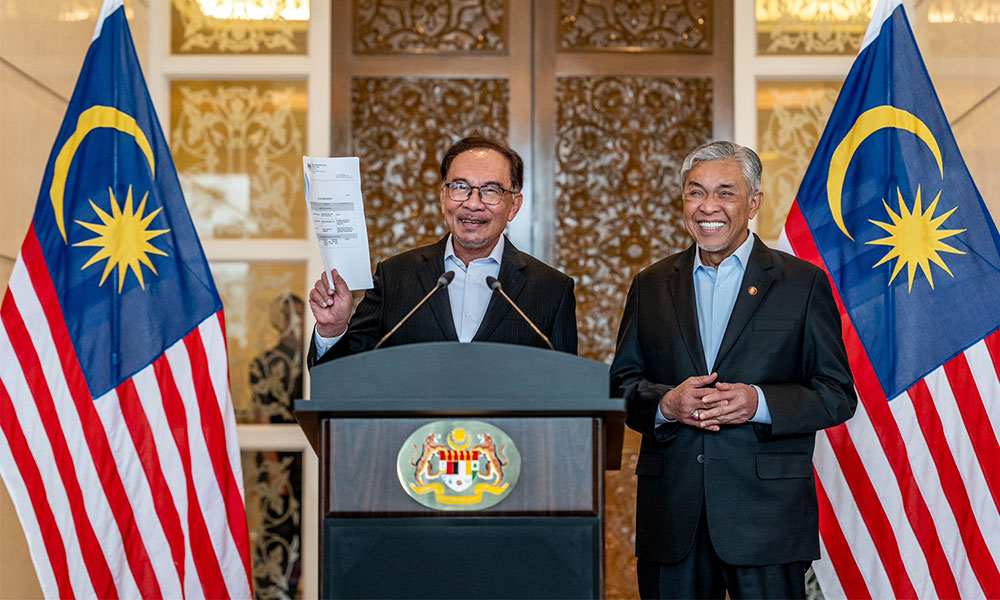
Prime Minister Anwar Ibrahim (left) and Deputy Prime Minister Ahmad Zahid Hamidi
BlackGuppy0377 : The corruption machinery in Malaysia is so bloody efficient coupled with the entitlement mentality and we have a perfect environment for all the little napoleons running around getting richer and richer at the expense of the common folks not to mention the environment.
Warning to Pakistan army as rebellion erupts in Pakistan-occupied Kashmir
Pakistan is facing unrest on multiple fronts. From Balochistan's train hijacking to Khyber Pakhtunkhwa's militant stronghold, the Pakistani army is struggling to maintain control.
Now, Pakistan-occupied Kashmir (PoK) is witnessing massive protests, with the United Awami Action Committee making strong demands. Their warning? If the army cracks down, the response will be even more severe.
I first met Captain David Daud in September 1960, a graduate of RMA Sandhurst, he was a flamboyant person driving a MGA sports car when he visited us at the Government Mess A chalet (now Wisma LTAT) where we stayed prior to departure for the Congo.
A brief background. The Congo during that period was basically divided into three factions:
(1) Mobotu's faction (pro-West), the central government, occupied slightly more than a third of the western portion of the country;
(ii) Gizenga's faction (left-leaning) occupied roughly another third in the eastern Congo, and (iii) Tshumbe's faction (pro-West business), occupied less than a third, the southern part of Congo.
Kindu was strategic with a port, rail and airhead in Gizenga's eastern Congo.
It was first occupied by a company of Nigerian (5QONR) ONUC troops. One day, a Nigerian platoon was ambushed by the Congolese near their Officers' Mess. The officer, a Lt Ben, a Sandhurst graduate was known to some of our officers, was killed, with many wounded.
The Nigerian Officers' Mess was a nice villa located on the road from the airport to Kindu town. After that ambush, the Nigerian contingent withdrew and was replaced by the Malayan Special Force (4RMR plus C Sqn 2 Recce) in March 1961. When we took over that Officers' Mess was rejected outright by our CO, Lt Col Ungku Nazaruddin simply because it was indefensible.
Protests continued across Turkiye against the government of president Recep Tayyip Erdogan. The unrest, which was triggered by the arrest of Erdogan's rival, has now expanded to other concerns around the economy and civil liberties.
What does this mean for Erdogan's political future? Is this the end of the road for the Turkish president?
The Turkish people have a wonderful political proverb: "When a clown moves into the palace, he doesn't become a king, the palace becomes a circus." The police are supposed to protect the people, NOT THE POWER! Türkey, Afghanistan Iran, Saudi Arabia will not exist This scream is the footsteps of a dictator's end. The dictator should know that he will be tried, he should give back to the state what he stole Mustafa Kemal's soldiers will not give up.
The steamy jungles of south-east Asia presented the stage for one of the deadliest confrontations of the Cold War where the philosophies of democracy, communism and nationalism clashed in bitter, brutal and bloody warfare.
Vietnam was born out of the ashes of the collapse of the French Empire but was a country divided with both sides dreaming of unification but without compromise when it came to their own beliefs.
Lasting 19 years and claiming over two million lives, the Vietnam War was as much a battle of wills as it was of tactics and weapons and in this regard, the communist north and their supporters in the south – the Viet Cong – had will to spare, so much so that not even the technology of the west could blunt their drive for victory.
While South Vietnam eventually fell to the communist north, history particularly in the west, views the conflict as an American tragedy given the damage it did to American prestige, influence and even its own society. However, the United States was by no means alone when it came to defending the South Vietnamese. Far from it for they called upon a number of key allies to support them not just militarily but diplomatically.
In this episode we are going to examine the involvement of one such key ally in the war for Vietnam – Australia.
Salute too all Aussie and New Zealand ... My deepest respects too all....I went to Sabah Australian New Zealand Army Corps ( SANZAC ) High School in Kota Kinabalu.... Heard those stories of your bravery from that school...
The Malayan Emergency - Britain's Deadly Jungle War v Communists
Britain's Victorious Jungle War Against the Communists. Chris Green is The History Chap; telling stories that brings the past to life.
Malaysian here, thank you for another great video. Thanks for the Commonwealth soldiers and shout out to the best local army at the times, The Sarawak Ranger. My dad served in Malaya (Green Howards attached to 6th Gurkha Rifles & Jungle Scouts) between '49 & '53.
One of their Iban trackers crafted a cased blowpipe & darts (in their own small case) as a parting gift for my dad, but the RSM caught wind of the gift and it was confiscated for use by the regiment lol. We visited the Regimental Museum back in the 70's, only to find dad's blowpipe set proudly amongst other items in their Malayan Emergency display case.
My Uncle, Brian Clayton (1936-2006) did his National Service 1957 to 1959 and served in Malaya. I wrote to him in 2005 and asked him to tell me about his time there. He wrote back with a few thousand words of his experiences in the Malayan Emergency and lots of photographs. I am willing to pass this stuff on to you if you would like. His reminisces are very evocative.
Brian was in the 1st Battalion of the Loyal Regiment (North Lancashire).
Indonesia–Malaysia Confrontation Footage - British Troops Join War Against Sukarno (1963-1966)
Tuesday, March 25, 2025
Captured Indons by 3rd RAR
From January 1963 to August 1966, Indonesia was engaged in an armed conflict with Malaysia. President Sukarno opposed the formation of the state, which was established after the Federation of Malaya, Singapore, North Borneo and Sarawak, merged.
The confrontayion remained an undeclared war invovling small-scale jungle clashes in the border areas. The border between East Malaysia and Indonesia saw the heaviest fighting with further action concentrated in Singapore and the Malay Peninsula.
The dispute ended after President Sukarno was deposed and Indonesia accepted the formation of Malaysia. ITN produced four reports documenting the conflict and reporting on the efforts of British and Gurkha troops who were deployed to help Malaysian forces.
Sukarno wanted to continue to rule without a democratic process (legislative oversight & elections, etc.) so he needed a diversion from the failure of his left-leaning socialist dictatorship in managing the economy and the PKI (Indonesian Communist Party) wanted to save the oppressed Malayan Communist Party.
They collaborated to create a confrontation in the name of expelling neo-colonialism in the Malayan federation.
But the Indonesian military did not fully support this effort and was divided into factions, those in favor were driven by the KKO (Marine Corps) and AURI (Indonesian Air Force) which had been infiltrated by PKI agents and those against were driven by the Army and Navy who hated the PKI.
Therefore, most of the ground forces were filled with untrained volunteers who were mobilized in a hurry, not regular soldiers.
Therefore, as with dictator-made conflicts, the confrontation was doomed to failure due to unreliable troops, logistical limitations due to poor economies and weak support from communist countries.
After the failure of the confrontation and under the pretext of protecting Sukarno, the PKI then carried out revenge and massacre of high-ranking Army officers in the G30S/PKI incident in 1965. The Army retaliated back against the communists and their sympathizers led by Suharto and the Army Reserve, then one of the worst genocides in the 20th century occurred which claimed the lives of 500,000 to 3,000,000 people, most of whom were not even communists including ethnic Chinese who were considered pro-Sukarno and mainland Chinese (PRC) communists.
However, to this day. The largest Secular Socialist Party in Indonesia (winner of the last 3 general elections) led by Sukarno's descendants and its supporters still glorify "Operation Dwikora" a failed effort and wasted state resources that should have been used for domestic development.
Waqf Act: How the British initially shaped it, only for Congress to hand it unchecked power after independence
The Waqf Board's sweeping powers today trace back to colonial-era laws,
later expanded drastically by Congress, allowing it to claim properties
with minimal checks.
OpIndia : In 1954, under the first Prime Minister of India, Pandit Jawaharlal
Nehru, the Waqf Act was introduced, replacing the 1923 law. The law
established Central and State Waqf Boards to oversee properties
Waqf has a long, winding history in India. Initially, back in 1894,
the British came up with the Waqf Bill for the first time via a
judgment. At that time, the British were grappling with its legal
status. From 1894 to 1947, laws and amendments were introduced to shape
the Waqf Act’s legal system. Later, after 1947, the Congress-led
government eventually turned it into a system with far-reaching
authority. So much so that now Waqf Boards can claim any property using
several clauses, and the onus to prove the land they have claimed is not
Waqf lies on the actual owner, which in many cases is the central or
the state government.
Waqf was
initially supposed to be about charitable endowments, which has
drastically changed over time. It has grown into something much larger,
often at odds with the secular framework of the country. The initial
rules were indeed set by the British, but it was the Congress that took
it further—and took it too far. Here is how the Waqf has changed over
time.
British rule – A shaky start for Waqf
Waqf properties were dedicated under Islamic law for religious and
charitable purposes. However, under British rule, Waqf faced legal
hurdles. In 1894, a landmark judgment by
the Privy Council in Abul Fata Mahomed Ishak vs Russomoy Dhur Chowdhury
sent a shockwave through the Muslim community. According to the
judgment, Waqfs which benefited the founder’s family were declared
invalid. The Council cited English law’s aversion to perpetuities as the
basis of the judgment.
It was not a minor ruling and challenged a tradition stretching back
to the Delhi Sultanate. Notably, Sultan Muizuddin Sam Ghaor gave
villages to Multan’s Jama Masjid, which continued through the Mughal
era’s vast Waqf holdings. The decision by the Privy Council caused
uncertainty among the Muslim community.
The case that led to the establishment of the foundation of the Waqf
Act stemmed from a family feud over a Waqf property in Bengal. Two
brothers, Abul Fata Mahomed Ishak and his sibling, had created a Waqf
property as per Islamic law. The intention behind creating it was to
provide for their descendants. The remaining benefits would eventually
flow to charitable causes. Following the death of the founders, a
creditor named Russomoy Dhur Chowdhury challenged the validity of the
Waqf in court.
7INN : A new regime ruled by a former jihadist who until December had a $10 million bounty on his head, who is building an Islamic dictatorship and who has just organized a religious pogrom of Alawites is getting flooded with money from Europe.
A scandal.
An “act of faith” worth 5.8 billion euros to the “new Syria”: The
Donors Conference organized by the European Union certifies the change
of pace in the West’s relations with Damascus after the fall of Bashar
Assad’s regime and the arrival to power of Ahmad al Sharaa, known as “al
Julani”. The conference raised 5.8 billion euros in loans and grants,
80 percent of which from the EU. From the Commission alone, Ursula von
der Leyen announced, 2.5 billion euros are arriving in Damascus.
Six billion a week after the worst religious pogrom in recent history?
A
new regime ruled by a former jihadist who until December had a $10
million bounty on his head, who is building an Islamic dictatorship and
who has just organized a religious pogrom of Alawites?
It is eye-opening. Mouth-dropping.
Once
the massacres were over, the dictator welcomed in Brussels formed his
new government: 21 ministers, all Sunni Muslims and of 154 government
appointments, 150 are Sunni. Not bad for “diversity”.
Meanwhile,
the European embassies in Damascus are reopening: today the German
Foreign Minister Annalena Baerbock flew to Syria. Two months ago the
dictator had refused to shake her hand. But evidently there is no
“Sofagate” that can stop her.
Amine
Ayoub of the Middle East Forum warns: “You cannot go from being an
al-Qaeda affiliate to a human rights defender overnight.” He emphasized
the concept of taqiyya, used to describe the deception sanctioned by the Islamic religion to consolidate power.
Are Europeans stupid? Or a mixture of cynicism and naivety? Or is it corruption? We have seen Qatargate.
Is the EU aware that it is funding a Taliban emirate in the Mediterranean?
A
bloodthirsty Islamist coalition, responsible for the massacre of
thousands of innocents - Christians, Alawites, Druze and other
minorities - has just taken power in Damascus. The European Commission,
always ready to lecture Hungary on “rule of law” and “protection of
minorities” to the point of cutting off its funding, remains strangely
silent in the face of jihadist massacres. And when it comes out of its
silence it is to announce 2.5 billion for the Syrian Caliphate.
"Do Not Leave Any Alive" - Sunnis vs. Shiites By Daniel Pipes
IDF Alpinists at Syria-Israel border
INN : No one knows how many unarmed Alawites were killed in Syria between March 6 and 10, but University of Oklahoma Middle East studies professor Joshua Landis estimates more than 3000.
While Alawites constitute but a small religious community in Syria,
perhaps 10 per cent of the country's 15 million resident population,
they suffer from a unique prominence and vulnerability.
Through a
millennium, they stood out as Syria's most isolated, impoverished,
despised and oppressed ethnicity. Only when generals from their
community seized power in Damascus in 1966 did the power balance change.
But
the ruthless domination of Syria by Alawites for the next 58 years
caused the country's majority Sunni Muslim population in 2011 to rebel,
leading to a full-scale civil war that ended in December 2024 when
Sunnis overthrew Alawite rule and returned to power.
Solid green indicates an Alawite majority and partial green a significant Alawite minority.
Recent events
point to an ominous Sunni desire for retribution. To understand its
sources and implications requires a look at the past.
As is well
known, Islam claims to be the final religion; accordingly, Sunnis and
Shi'ites alike historically reviled Alawism, a new and distinct religion
that emerged from Shia Islam in the ninth century. They looked upon
Alawites as apostates. A 19th-century Sunni sheik, Ibrahim al-Maghribi,
decreed that Muslims might freely take Alawite property and lives, and a
British traveller records being told: "These Ansayrii, it is better to
kill one than to pray a whole day."
Frequently persecuted and
sometimes massacred during the past two centuries, Alawites insulated
themselves geographically from the outside world by staying within their
highlands. A leading Alawite sheik called his people "among the poorest
of the East". Anglican missionary Samuel Lyde found the state of their
society "a perfect hell upon earth".
After Syria's independence
from French rule in 1946, Alawites initially resisted central government
control but reconciled to Syrian citizenship by 1954 and, taking
advantage of their over-representation in the army, began their
political ascent.
Syria: Terrorists in Suits and Ties No Future for Christians or Other 'Infidels' by Lawrence A. Franklin
From March 6-9 – unchecked by Ahmed al-Sharaa's professedly "moderate"
interim government – his jihadist troops slaughtered an estimated 1,080
Syrians in 72 hours, apparently mostly civilian members of the minority
Alawite religion.
Gatestone Institute : In December 2024, after an offensive lasting less than two weeks that
swept through much of Syria, a Turkish-backed Sunni militia led by
Ahmed al-Sharaa ousted the Assad regime, which had ruled the country for
54 years.
From March 6-9 – unchecked by al-Sharaa's professedly "moderate" interim government – his jihadist troops slaughtered
an estimated 1,080 Syrians in 72 hours, apparently mostly civilian
members of the minority Alawite religion. The Alawite sect, which split
off from Shia Islam in the ninth century, is regarded by other Shiites
as heretical. To people who practice Sunni Islam -- the religion of
al-Sharaa and Turkey -- all non-Sunnis are infidels. Alawites are
estimated to be up to 10% of Syria's population, and the deposed Assad
family belong to the sect.
Al-Sharaa, on taking power in Syria in December, originally professed
to be a "moderate." The Biden administration even lifted a $10 million
bounty for his arrest, for previous terrorist activity linked to Al
Qaeda, presumably in the hope of moderation actually being delivered.
Since that time, however, al-Sharaa and his followers have appeared more
as terrorists in suits and ties.
Since December, and escalating in March, Jihadist terrorist gangs have been slaughtering Alawites in coastal Syrian towns. The atrocities this month began purportedly in response
to attacks on government troops by Alawite remnants of the Assad
regime's security and military forces. Some Syrian Christians were also slain, but possibly not specifically targeted by the new government.
Like the Alawites, Christians were for the most part a protected minority during the Assad years. According to many Syrians, however, Christians are resented by the Sunni Syrian majority "because they are viewed as infidels."
Mahmoud Khalil, the Columbia University anti-Israel activist whom the
Trump administration has targeted for deportation, has become a darling
of the left, as people who hate America so often do. The New York Civil
Liberties Union (NYCLU) claimed Friday
that Khalil’s arrest “has created a speech-chilling atmosphere of
fear,” and charges that “the Trump administration’s actions represent a
dangerous escalation of the president’s attempts to choke off the free
speech rights of people on American soil.” And on Sunday, Khalil’s wife
attempted to blow up the entire case against him, asserting that it was “ridiculous” and “disgusting” to say that Khalil supports Hamas.
This is all-important, because if Khalil is found to be a Hamas supporter, the case against him would be nearly open-and-shut. U.S. Code § 1182 states
that “any alien” who is “a representative” of “a political, social, or
other group that endorses or espouses terrorist activity” is
“inadmissible.” U.S. Code § 1227 adds that such an alien “is deportable.” The Associated Press described Khalil two weeks ago as one of the “student leaders of Columbia University Apartheid Divest” (CUAD). The Washington Post reported last Tuesday that “No one disputes that Khalil was the face of Columbia University Apartheid Divest.”
Khalil was CUAD’s chief negotiator with Columbia administrators. Politico explained:
“Khalil was a lead negotiator representing the student protesters to
the Columbia administration during the school’s ‘Gaza Solidarity
Encampment’ last spring. The student group behind the encampment —
Columbia University Apartheid Divest, or CUAD — had two main demands:
that Columbia cut all its ties to Israel, including divesting and
halting plans to build a ‘global center’ in Tel Aviv, and that the
protesters themselves receive amnesty for their actions.”
However, apparently aware of how damaging that fact is to his case, Khalil himself disputes this. The BBC framed Khalil’s
connection to CUAD as if it were merely something his opponents
claimed: “Activists supporting Israel have accused Mr Khalil of being a
leader of Columbia University Apartheid Divest (Cuad), a student group
that demanded, among other things, the university to divest from its
financial ties to Israel and a ceasefire in Gaza. Mr Khalil has denied
that he led the group, telling the Associated Press (AP) that he only
served as a spokesperson for protesters and as a mediator with the
university.”
It’s easy to see why Khalil would want to distance himself from CUAD. In August 2024, it posted this
on Instagram, then removed it once it started getting appalled notice
from saner quarters: “We are Westerners fighting for the total
eradication of Western civilization.” During the anti-Israel protests at
Columbia, the demonstrators screamed “Death to America.”
Media Rallies Against Deportation of Student Who Urged Taking ‘Cue’ from Hamas By Daniel Greenfield
Robert Spencer : “My hatred of the US empire knows no bound”. Momodou Taal had a simple plan. Come to America on a student visa to destroy it from within.
In one post, he wrote, “The end of the US empire in our
lifetime in sha Allah.” Months later, he celebrated receiving his
student visa, writing, “Student Visa issued. We going to America baby!
Alhamdulillah!” Shortly thereafter, he tweeted, “My hatred of the US
empire knows no bound. Wallahi.”
“When the enemy is US imperialism, then absolutely anyone the US
calls an enemy is my friend,” he posted in July. “My hatred for US
imperialism and the global system it reproduces knows no bounds,” he
wrote one month prior. “At this point; any movement, nation, people who
are working to decrease the impact and effects of US imperialism on the
world has my support.”
“This is what they referred to as ‘resistance’. The burning to death of Jews. The rape of Jewish women.” By Hugh Fitzgerald
Robert Spencer : The truth-telling British journalist Brendan O’Neill has read the
All-Parliamentary Report on the October 7 atrocities carried out by
Hamas, and now reports on his own reaction here: “A savage rupturing of
our civilisation,” by Brendan O’Neill, Spiked, March 20, 2025:
…The youngest victim was
14 hours old. That was Naama Abu Rashed, a Bedouin Israeli, shot while
still in her mother’s womb. The bullet went through her tiny leg. She
was born gravely wounded, and later died. The oldest victim was Moshe
Ridler, a 92-year-old Holocaust survivor. He perished when Hamas
militants fired a rocket-propelled grenade at the safe room in which he
had sought refuge from the rampage. They then shot to death his Moldovan
carer, Petro Boscov. Mr Ridler, as a kid in Romania, had survived the
Nazi ghetto and deportation trains, but he could not survive Hamas’s
sadistic crusade.
The methods of murder included shooting, burning, asphyxiation,
grenade explosions and missile attacks. Many of the victims were
subjected to mutilation, sexual violence and ‘other forms of deliberate
brutality’, either before or after death. A woman was raped at gunpoint.
Other women were raped in their bedrooms before being murdered. Rescue
forces found women’s bodies ‘stripped of their underwear’ as well as
‘signs of semen’. The part of the report where I had to take a break
from reading describes the discovery of a woman’s body where there had
been ‘[the] insertion of a knife into the genital area’.
The violence was ferocious. Molotov cocktails were thrown to burn
people alive. A father and his baby daughter suffered savage burns when
Hamas militants used a butane gas cylinder to make an inferno of their
home. Dad spent 58 days in an induced coma, his daughter spent eight
days. Hamas entered one home screaming ‘Yahud!’, meaning Jews. And they
found Jews: a father, a mother and their four kids. Dad used a piece of
furniture in a desperate effort to ward off the invaders – they shot him
dead. They then shot his daughter in the face. She had ‘a hole in her
cheek and she was gasping her last breaths’, her mother later recounted.
Mum and the three surviving kids were taken to Gaza and forced into a
‘hole’ in the ground. Why? Because they’re Yahud.
The report is full of accounts like this, of the most bestial
violence, visited with extreme prejudice on men, women, children. 7
October feels like a thing from the last century, the century of war and
extermination. It was as if atavistic hatreds had leapt from the
history books and imprinted themselves on our complacent era. Perhaps
the report’s most valuable contribution is to make it crystal clear that
this was no impulsive assault. This was not the Wretched of the Earth
‘breaking out’ of their ‘prison camp’ to wreak desperate revenge on
their oppressors, as Hamas-adjacent leftists would have us believe. No,
this pogrom was years in the making. It was a conscious and thoroughly
organised massacre of Jews….
This, then, is what the activist class has been making excuses for.
This is what they referred to as ‘resistance’. This is what they called
‘a day of celebration’. The burning to death of Jews. The rape of Jewish
women. The murder of Jewish children. The assassination of a Jew who
had survived the greatest crime in history. We now have all the data,
all the timelines and all the information about 7 October. But we still
await that moment of moral clarity when our intellectual elites finally
acknowledge the gravity of this crime against Jews and humanity, and
devote themselves to defending the civilisation it so gravely offends.
I have nothing to add to Brendan O’Neill’s impassioned response. Now
if you can stand to do it, read all of O’Neill’s article, and then read
the entire 318-page report. Then you will understand why Israel must,
not just for its own survival, but for everyone who is part of our
advanced, Western, still salvageable civilization, destroy Hamas —
destroy it utterly.
The slap is about power, not hypocrisy By Commander S THAYAPARAN (Retired) Royal Malaysian Navy
Malaysiakini : “I was just eating normally and the uncle asked if I am Chinese or not. I said yes, because that’s a normal question.” - Elijah
COMMENT
| This young non-Muslim kid was slapped, and I read all these articles
about how this is a hypocritical act considering this is a holy month of
fasting.
Never mind that this act happens in a country where the
religious bureaucracy and the state make it mandatory for believers to
fast. Where shops are closed for the fasting month. Where school
canteens operating for non-Muslim students become fodder for the
political and religious class.
Not to mention this is a country
where non-Muslims are banned from using certain words and demonised by
religious preachers for their religious beliefs. Where the religious
class and political operatives always tell non-Muslims to stay clear of
religious issues even if they trespass onto their rights as citizens of
this country.
When
this man slapped this kid, it was not about religious hypocrisy. This
is not about how someone misused religion. This is about how ideas of
superiority infect the social interaction of the everyday rakyat.
This
is about bully-boy tactics that are internalised and then unleashed on
people who couldn’t defend themselves except to let the world know of
their victimisation.
darmakochi : "The slap is a petty display of religious power but carries the same symbolic weight as the power that comes with building a mosque on the site of a demolished temple."
Sir, you said it very well!
Koel : It is religious bullying by cretins nurtured in violence.
But I am also not impressed by the lack of action by the eatery where this young man was assaulted.
They should have also have immediately lodged a police report, at the very least, to show their customers that they are concerned about their welfare.
Failing to protect customers under their roof speaks badly of their customer service.
Just another indication that non Muslims should look for non halal eateries where violent cretins don't roam.
ScarletPanda9731 : Do not cross the RED LINE.
AMICABLE SOLUTION means RESPECT ALL
The kid had the RIGHT to eat food in the open .
The Hindu temple at Jalan masjid INDIA
was ALREADY THERE 130 YEARS AGO!PSO, WHAT OWNERSHIP are you barking about ?
City Hall did not exist 130 years ago!
Umno did not exist then .
What " AMICABLE SOLUTION " IS TO RE- LOCATE the temple?
A win- win solution is to have BOTH MOSQUE AD TEMPLE SIDE BY SIDE
Fair or not?.
Open minded 2281 : The authorities also feel that non Muslims can be bullied and there is no offence when a Muslim preacher mocks the Hindus. All this happens because the Minister of Home Affairs is ineffective and the cabinet just closes all their eyes.
KK Voter : Every religion that practices fasting emphasizes abstinence, spiritual cleansing, and self-discipline. However, here, one month every year, the message seems to be:
"I am fasting; therefore, I am above you and can abuse you in the name of righteousness," making the entire fasting ritual pointless.
Those who create Islamophobia blame others for having Islamophobia.
Nowadays, during the fasting month, I change my dinner time to avoid overlapping with fasting Muslims. Where I live, even if there is no physical aggression, sitting in a restaurant and eating around 6:00–6:30 p.m. earns me plenty of dirty looks from Muslims who are sitting there waiting to break their fast.
It wasn’t like this when I was growing up in the ’70s and ’80s, studying in a "kampung" school with three classrooms, where we had an approximately 50:30:20 Malay:Chinese:Indian mix.
We were all from B40 families, sat together to eat, and during the fasting month, our Malay friends still hung out in the canteen to play with us while we ate. No one had any problems then.
OBSERVER from Space : The most accurate, truthful & courageous article on this despicable cretin's act.
Certainly the dark truth on the status of Malusia..
Blessings upon you Commander Thayaparan..
MS : One of the last few truth-tellers left in a country darkened by untruth.
Just : Pure racial bullying. Gone to physical Level. This man need to be sentence to jail for his assault and his brain need to be realign or rebrainwashed to Normalcy.
The Illusion Of Choice : It has nothing to do with Islam or hypocrisy (religious or otherwise).
Its about putting the pendatangs in their place
This man believes in Malay Exceptionalism....that the Malays are lords of this land.
Classic Ketuanan mentality.
He wanted to flex this "superiority" over a pendatang, a young boy no less, bespectacled, alone, smaller than him, looks soft, who posed no threat.
Do you think he would have done the same if it was a big-sized Indian man?
Or a Chinese ah beng covered in tattoos?
He saw an easy prey and he wanted to flex his Ketuananism.
And when the boy answered him back, he couldnt believe it. He exercised his "authority" and it wasnt acknowledged
How dare this pendatang talk back. Why didnt he cower?
Why didnt he respect his Malay "superior"?
It made his blood boil. At a loss, he resorted to violence to reinforce his superiority.
The rage and pure hate that these people feel against the NMs is palpable, boiling over.
You see it in their words and actions. Its a very intense form of bigotry.