Rudyard Kipling"
“When you're left wounded on Afganistan's plains and
the women come out to cut up what remains, Just roll to your rifle
and blow out your brains,
And go to your God like a soldier”
General Douglas MacArthur"
“We are not retreating. We are advancing in another direction.”
“It is fatal to enter any war without the will to win it.” “Old soldiers never die; they just fade away.
“The soldier, above all other people, prays for peace, for he must suffer and be the deepest wounds and scars of war.”
“May God have mercy upon my enemies, because I won't .” “The object of war is not to die for your country but to make the other bastard die for his.
“Nobody ever defended, there is only attack and attack and attack some more.
“It is foolish and wrong to mourn the men who died. Rather we should thank God that such men lived.
The Soldier stood and faced God
Which must always come to pass
He hoped his shoes were shining
Just as bright as his brass
"Step forward you Soldier,
How shall I deal with you?
Have you always turned the other cheek?
To My Church have you been true?"
"No, Lord, I guess I ain't
Because those of us who carry guns
Can't always be a saint."
I've had to work on Sundays
And at times my talk was tough,
And sometimes I've been violent,
Because the world is awfully rough.
But, I never took a penny
That wasn't mine to keep.
Though I worked a lot of overtime
When the bills got just too steep,
The Soldier squared his shoulders and said
And I never passed a cry for help
Though at times I shook with fear,
And sometimes, God forgive me,
I've wept unmanly tears.
I know I don't deserve a place
Among the people here.
They never wanted me around
Except to calm their fears.
If you've a place for me here,
Lord, It needn't be so grand,
I never expected or had too much,
But if you don't, I'll understand."
There was silence all around the throne
Where the saints had often trod
As the Soldier waited quietly,
For the judgment of his God.
"Step forward now, you Soldier,
You've borne your burden well.
Walk peacefully on Heaven's streets,
You've done your time in Hell."
In the military, the non-Malay is ridden like a horse Written by Major (Rtd) D.Swami Friday, 26 November 2010 - Republishing After Editing And Adding More Today
Saturday, April 27, 2024
My dear late brother, in 1964 , 205375 Trooper Purshotma Dass of C Squadron 2nd Reconnaissance Regiment who answered the call when his relations were trying to "Ganyang" Malaysia - The Indonesian Confrontation
Lim Kit Siang : Defence Minister Ahmad Zahid Hamidi remarked that non-Malays shun a
military career because they lacked patriotism. His sense of history and
of the contributions of the Chinese, Indians and our brothers from East
Malaysia towards the sovereignty of Malaysia leaves something to be
desired. Zahid’s is a racist and bigoted view, pure and simple.
I’ve previously blogged about the winners of valour awards, not
including those who had laid down their lives, are maimed, and not
forgetting the non-Malay police officers.
I guess when the Chinese and Indians were bleeding and dying for this
country, Zahid might just have been a dirty glint in his father’s eyes.
I am not insulting this dull fellow, just that this shallow-minded
individual needs some input regarding who was the first Malaysian to be
awarded the Pingat Gagah Berani. He was a Chinese! Sergeant Chong Yong Chin PGB of the First Federation Regiment.
Dey Zahid, I suppose you did not know that. Insults have to be politely reciprocated with civility, I am doing just that.
Did you not know who was the first recipient of the Pingat Gagah
Berani in the Congo? That person too was a Chinese, Lieutenant Lee Ah Pow PGB, read about how shoddily he was treated too! It had to take
Brigadier R.S. Noronha of the Indian army (during a UN peacekeeping
mission in Congo) to recommend him for an award. Lt Lee had shown
exemplary courage and tremendous restraint under fire, yet his own
Malaysian high command overlooked his valour.
There was another young Chinese officer, Lt David Fu Chee Meng, who too was awarded the PGB at the Battle of Tanah Hitam.
So those guys were not patriotic enough for you? Here is my
favourite, someone I know personally, Sergeant Choo Woh Soon PGB, my
wife’s uncle. The short guy in the centre of the photo is Sergeant Choo
Woh Soon PGB. This guy, patriotic enough for you. My wife's uncle.
This is my father in law Corporal Choo Woh Hup, the elder brother of Sergeant Choo Woh Soon PGB
How about this where a sorry excuse for an officer caused the death
of 13 Italian airmen in the Congo. The Malay Major had shirked his responsibilities of providing the airmen with protection, placed them in
danger by ordering them to be brought to the mess and allowed them to
be captured by the rebels. The Major then further disgraced himself by
ordering all the officers and men at the mess to surrender their weapons
to the rebels who had surrounded them, which they did sheepishly.
I will not even talk about the vandalising of the Hoba meteorite in Namibia.
Here is another Indian, who after serving a total of 29 years in both
the police force and the army is denied his pension. The reason being
he did not attend the weapons course and tactics course. What weapons
and tactics course, when he and his men wiped out the remnants of the
enemy in Selangor. What would his unshaved instructors teach him? Read
about him, Captain Courageous aka Mukhtiar Singh s/o Sodagar Singh.
In any other army in the world today, they would have cited Mukhtiar
Singh for courage and piled honours on him without any questions asked.
Unfortunately he is an Indian in Malaysia, get that Zahid?
Here is a picture of an all Chinese group of Kinta Valley Homeguards who
fought the Malayan Communist Party. More pics here...
The problem with people like Ahmad Zahid Hamidi is he does not know
about people like these Chinese and Indians who were willing to die for
Malaysia unconditionally. They only wanted to be treated fairly. The
current situation is like “some people are more equal than others”.
East M’sians discriminated against
People like Zahid are wind bags, full of foul air and all empty talk.
If you notice the minorities were significant in numbers in the
forces when Malaysia was in danger, from the Japanese occupation of
Malaya, the Emergency, Confrontation and the subsequent Emergency until
the cessation of hostilities by the Malayan Communist Party.
Remember the Communist Party of Malaya did not surrender. It was a
treaty for the cessation of hostilities. Freeing our Great Leader to
push his agenda of Ketuanan Melayu, subsequently his achievements were …
I shall just cite one, i.e. the amazing statement that Anwar Ibrahim
socked himself in the left eye to gain public sympathy and give the
police a bad name.
Mahathir could not do many of the things he has done
if the Malayan Communist Party was on the warpath as it would increase
their numbers. Zahid, being an ardent fan of this old goat, is still
playing to the gallery.
Soldiers who have served, the non-Malays, know what it is to be
discriminated against because of their race and religion. Even the
Bumiputras of Sabah and Sarawak are discriminated against, as most of
them are Christians.
While at this, being an ex-soldier and all, I have seen many East
Malaysian officers serving in combat units. Why did not any one of them
make it to General? Not good enough?
Look at how brave, loyal and patriotic they are. See in the archives
for the records I’ve compiled. After seeing the results of the Sibu ‘buy
elections’, where the BN lost, I guess they saw the writing on the wall
and recently promoted an Iban officer to become the first Iban who made
it to General, Stephen Mundaw, in September this year.
Anyway that is peanuts, East Malaysians should demand and expect at
least a 4-star General from amongst the Ibans, whose bodies have been
littered across the battle fields in Malaysia. Their courage and
ferocity in battle is unmatched.
Treat everyone equally on a level playing field and you will not need
to ask for the non-Malays to defend this country. The numbers would be
so huge that you would have to send most of them back.
In the military, the non-Malay is ridden like a horse, for the
greater benefit of the majority. No rewards, when it comes to promotions
and benefits … they forget you. You know about the old race horse, that
it runs until it drops dead or is put out to pasture. Most non-Malays
make it to the rank of Major, I am sure you have heard this before,
about the infamous glass ceiling. That is the rank you have to be happy
with.
You are not promoted on merit. I know of guys who can barely speak
English but become Generals. During my time all the courses were in
English. Ask the ex and serving non-Malays about the subtle hints to
convert. They do not even respect your faith by suggesting that. If
they’re always hinting to you that you should convert, it means they
look down on you.
Religious and racial discrimination go hand in hand.
I have also had the privilege of seeing a General’s knees tremble,
when he stepped out of my Infantry Fighting Vehicle (IFV) as I helped
him down. This was after an exchange of fire. I was the escort commander
and he was riding in my IFV in Somalia.
A hundred non-Malays would, without hesitation and asking questions,
charge a hill of 10,000 enemies to defend their country, Malaysia, if
you treated them and their offspring as Malaysians and not as dhimmis
and second-class citizens.
I could continue shellacking Ahmad Zahid until the cows come home but
it is us who are to be blamed. He is the MP for Bagan Datuk, Perak.
Those of us who continue supporting MCA and the MIC, are actually
getting him elected year in, year out. Your votes have made him
arrogant. If you notice his majority is actually shrinking. So the
strongest message for the Defence Minister would be to boot this racist
Umno supremacist out of Parliament in the next general elections.
Never forget.
For all comments go here.......
————————————————————————– This article, first published Nov 12, is taken from the blog Seventh
Rangers (Mech) and reproduced here with the author’s permission and
some minor editing by CPI.
Must all Malaysians be pro-Hamas, anti-Israel? By Francis Paul Siah
Malaysiakini : COMMENT | I wish to pose this very
important and serious question to Prime Minister Anwar Ibrahim and his
allies in the Madani government.
I’m hopeful for a reply from the
ever “caring, helpful and responsible” Madani government, hopefully from
its official hotshot information chief, Fahmi Fadzil. I will humbly
request a clarification from the communications minister.
My key
question is this: Is there an unwritten rule or order somewhere which
firmly declares that all Malaysians must support Hamas and denounce
Israel? Do we have a choice?
I also wish to see this narrative
straightened out. If there are Malaysians who are pro-Israel and make
anti-Hamas statements, are they deemed to have committed a “crime”? This
is a very disturbing issue which many Malaysians want the government to
clarify.
I’m aware that a man was arrested in Johor Bahry last
December over his statements supporting diplomatic ties between Malaysia
and Israel.
According
to the police, the case was being investigated under Section 4(1) of
the Sedition Act, Section 505(b) of the Penal Code for making statements
conducing to public mischief. So far, we have not heard of any update
regarding the case.
Anwar selective about what he wants to read or hear By R Nadeswaran
Malaysiakini : “I disapprove of what you say, but I will defend to the death your right to say it.”
― Evelyn Beatrice Hall, as an illustration of Voltaire’s beliefs
COMMENT |
On the outset, let me declare that I do not know and have not met US
academic Bruce Gilley and neither do I subscribe or agree with his
latest utterances which I read, and the reaction from local leaders.
I
am also against any form of violence and certainly sympathise with the
people of Palestine who are being driven to the brink of starvation and
death by the actions of the Israeli army.
However, I am against anyone trying to rile up people against those who express views contrary to the government’s opinions.
Yes,
Gilley did ruffle more than a few feathers but why is the line of
reaction and argument based on the lines of intra-party and inter-party
bickering by local politicians?
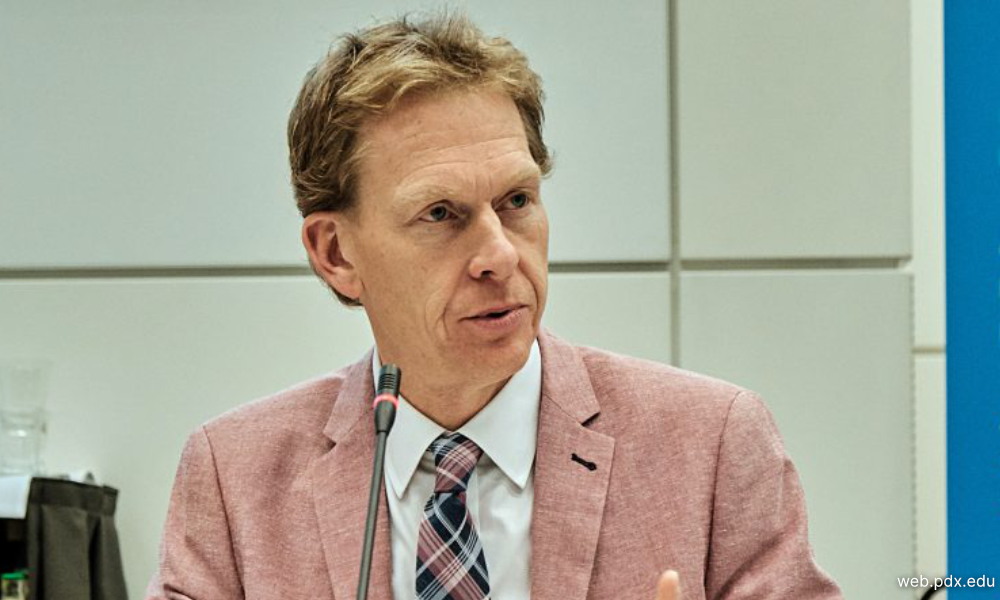
Bruce Gilley
If
the intention is to score brownie points ahead of the Kuala Kubu Baharu
by-election, there are even better ways in which the task can be
completed with finesse.
As a Veteran, it is still hard to watch even after the passing years. Have to give credit to creators, directors, and actors for their dedication toward the authenticity of this film. Thank you…
As a combat veteran, I salute this movie and the creators. God have mercy on the fallen, and the living soldiers. Amen. THE best Afghanistan War movie I have ever watched. I can't believe I missed this one when it first came out but here 9 years later I'm glad I caught up with it.
Leaves some Hollywood movies to shame. Great story, great acting and the most authentic movie of its type. Hats off to the film crew and actors. Bloody hell, what a movie. I generally don't watch war movies, too much of the same old, same old.
This was fantastic throughout. Had tears in my eyes in the end.
King Robert the Bruce is injured and on the run from the English army. On the brink of defeat, a widow and her family nurse him back to health and join his campaign to claim the long-awaited freedom of Scotland. Loosely based on the true story.
Great film. When I was a boy my father told me the story of Robert the Bruce taking courage from watching the spider fail six time to land its web and then succeeding on the seventh try. Today I am in my ninth decade and we have the same fight for freedom in America against an enemy that has stealthily infiltrated us. I believe we will succeed.
My favorite line is just as true today, “The sharpest sword in the world, wasted and on the dullest mind in the valley.”
Featuring Julian Assange, George Clooney, and brutal witness accounts, this film explores the controversy surrounding the Armenian genocide and persecution of Middle Eastern Christians, including the U.S. politicians who deny it occurred.
Armenia is strong. Keep it up and do not let your land be grabbed by any brutal force. India stands with you. Greater economic cooperation between Armenia 🇦🇲 and Bharat 🇮🇳 would be of great benefit to both nations.
A narrow strip of land(Armenia) is withholding a new Turkic Ottomon Caliphate stretching from Istanbul to Siberia. West and India should help Armenia. Why are Christian countries NOT helping Armenia, Islamic countries are helping Azerbaijan.
The Armenian Genocideby Turkey and it's evil allies should not be repeated.
.
As pro-Gaza protests spread across colleges in the US, some schools have been negotiating with student protesters who have rebuffed police and doubled down. Others have quickly turned to law enforcement to douse demonstrations before they can take hold.
That has led to police brutality across campuses. Police have been accused of using rubber bullets and teargas against the protesting students. If this was happening in any other country, Washington would be the first to condemn it. So why are they blind to the police crackdown in their own campuses?
We are waiting for the sermon from the US and how virtuous their politicians are
Malaysiakini : COMMENT | The authorities fear you
more if you are able to present cogent arguments which may convince
others that what you say has merit.
Weapons may kill or maim, but
words and convincing reasons can influence generations and create
change. This is what governments fear most. Instead of wrapping
our students in cotton wool and caging their minds with invisible barbed
wire to stop alternative thought processes from penetrating their
brains, we should be encouraging more robust dialogues.
On April 23, the American academic, Bruce Gilley (above) , upset many Malaysians at a lecture at Universiti Malaya. They
did not like his pro-Israeli views, but people tend to forget that
being offended does not necessarily mean that they are right.
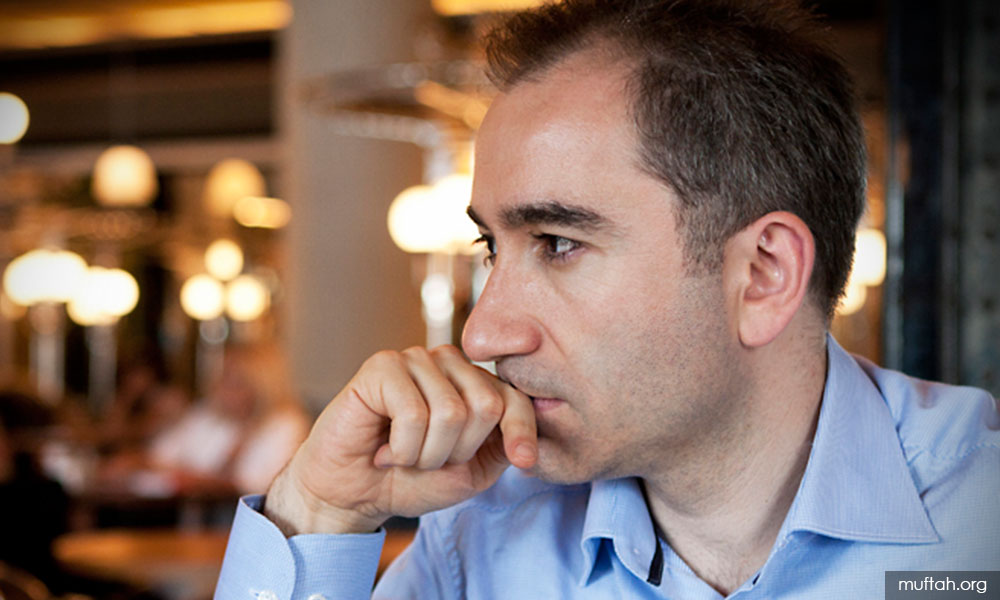
The professor of political science from Portland State University has since left Malaysia because he feared for his safety. But interestingly, some people disagree with him. Perhaps, they have forgotten the fear felt by Mustafa Akyol, the senior lecturer of Islam, at Boston College.
In
September 2017, Akyol was detained, interrogated and intimidated by the
authorities at KLIA. A few hours earlier, his modern approach to
apostasy in Islam had triggered warning bells in our archaic religious
police, and at KLIA, he was detained and interrogated. That was not a one-off incident because in January this year, political scientist Ahmet T Kuru, was accused by our authorities of being a terrorist.
Mustafa Akyol
His
book launch had to be cancelled by a local think tank who feared for
his safety. At KLIA, Kuru, who is the director of Islamic and Arabic
studies at the San Diego State University, claimed that five
plainclothes police officers were waiting for him.
Spratyls888 : In year 2023 PMX go jet setting to :
China (3 trips), Australia, Middle East America (3 trips) & Germany
On all occasion he was advocating for Hamas & Palesine cause like he is a spokesman of evil Hamas but never for once he condemn Oct 7 astrocities!
He urge for CEASEFIRE but NEVER for once did PMX urge for the release of Israelis hostages! Imagine the foreign dignitiaries have to put up with his cock & bull hearing him spewing pro terror -rist propaganda!
Hamas convenant clearly advocated the “destruction of Israel”, at least as PM, Anwar should point out which part of Professor Gilley’s comment are wrong instead of resorting to name calling & personal attacks. Unbecoming of a PM. Such PM is a indeed a disgrace to our nation.
The herd mentality of this bigot nation have most probably rendered “free speech & expression” a CRIME sooner or later. At this bigot nation no dissenting thoughts or opinion are allowed! Its either the KETUANAN way or Communist way!
Have we reach a point of no returns?
PMX Anwar is the only PM that did not get invited to White House despite 3 trips to America, unprecedented! Shamefull…
RainbowHuman1963 : If it is a myth that Islam permits critical thinking then you, Mariam, are a mythical legend.
In reality you are a normal thinking person that the establishment may view as a threat, whereas many Malaysians nowadays seem to just let our politicians do the thinking for them.
Apollos: Malaysian Unis prefer echo chambers, robot-like students. You know, the gigo type - garbage-in, garbage-out. If you are a thinking student, you create problems for the uni. That they abhor.
Forget about the MUDA acting president. She is a dimwit. Sad.
JWKK : Bravo, Mariam. I couldn't agree with you more. You and Prof Tajuddin Rasdi have the heart of an academic/scholar, unlike many who simply fail to understand the basic DNA of true academic research and presentation, which is, that it invariably will upset some--a lot or a few, depending on the topic and context.
And Mariam is also right to point out that how come, it seems, no one at the speech delivered by Gilley questioned him and offered a counter narrative? An academic forum is also about discussion, debate and exchange of different ideas in an effort to get closer to the truth.
People who are quick to restrict freedom of speech simply are ignorant of this process of healthy exchange of ideas to provoke even agitate in order for different views to see the light of day to make sense of an issue/reality.
To those who quip this is so ivory towerish, well, again, you just don't know what being an academic is about.
Don't for a minute dismiss this academic provocation, debate, and exchange as nothing more than a waste of time. For that is the germination of progress.
And if this culture were to be a solid part of an institution of higher education, it will seep out of its corridors into the non-academic world.
Think of the wonder and benefits that will be created.
Predictably, the ketuanan mentality is about silencing counter narratives with the threat of apologies, sanctions, fines/ jail terms.
This approach also taken by PM Anwar is yet another evidence of reformati. He has the right to label Gilley a mediocre scholar.
But,, if Gilley is mediocre, why do you want to silence him from our shores? You or your madani is now afraid of mediocrity?
All this is to show that the academic DNA is still far far from the academic world of higher education in Malaysia because Malaysian academic basically is about "yes, sir" in the public sector and "yes, boss" in the private sector.
Any wonder why our academic hardly stand out in the world and that it catches global attention almost always for the wrong reasons like the UPM "academics" fabricating the past to glorify the ketuanan?
MS : Based on his known academic credentials and qualifications, Bruce Gilley is far more qualified than most Malaysian academics and definitely Malaysian politicians.
So he has an opinion which most Madanistanis have a problem with. Instead of debating him like what real academicians and intellectuals would do to disprove his notions, the knee-jerk reaction here is of the Ketuanan Melayu-Ketuanan Islam variety.
"Local sentiments" which is really code for Malay sentiments (because "local" in Malaysia does not obviously include non-Malays) is cited as justification for the reaction and name-calling.
Which is perhaps why "local sentiments" were not hurt in any manner by the provocative rantings of one Zakir Naik who incidentally was given his PR despite being unable to speak in Bahasa Melayu - a point conveniently disregarded by the likes of that other UMNO intellectual... Dr Akmal
Kajang pigeon : Not a single academic in boleh land could stand up and refute or debate his claim. It’s true they panic and censure anyone who doesn’t follow their views , this is seen in countries like North Korea , Iran and other dictatorial nations.
An opinion is a dangerous view… glad you pointed out how. A criminal like zakir is given the red carpet but an academic is shooed away.
PSPRM (Pertubuhan Suara Patriotik Rakyat Malaysia) - Message from Major Meor Rosli (Retired)
Friday, April 26, 2024
PSPRM : Saya telah wujudkan website PSPRM ini dengan bantuan Kapt Sapuan (bersara) website dan PW Azlan TUDM (Bersara) untuk Media video dan studio rakaman.
Saya telah cuba himpunkan samua gambar/video/tulisan saya yan lampau dan terkini/berita dalam website in. borang keahlian juga ada dalam website ini.
Saya mahu semua ahli2 PSPRM pin website ini supaya tuan2 dan Puan2 boleh merujuk dan tidak ketinggalan dengan berita2 semasa mengenai pejuangan kita. Marilah kita meperkukuhkan PSPRM denga menambahkan ahli kita.
Veteran tidak perlu berhenti keahlian persatuan veteran di bawah JHEV kerana setiap veteran wajib menjadi ahli PV dibawah JHEV dan menyokong Usaha2 KP JHEV dalam kebajikan veteran yang diberikan oleh kerajaan.
PSPRMhanya memperjuangkan isu-isu yang JHEV tidak mampu laksanakan kerana mereka adalah organasasi kerajaan. - MMR
Aussie veteran condemns 'DISGUSTING' Anzac Day protesters Avi Yemini 795K subscribers
Lest we forget
Veterans have expressed outrage as anti-Israel protesters and activists attempted to disrupt and desecrate ANZAC Day commemorations nationwide.
Rebel News : Dave Menz, President of the Aussie Veterans Association spoke out against the shocking disrespect shown towards the solemnity of the day by anti-Israel activists who tried to disrupt and desecrate commemorations around the country.
Reflecting on the significance of ANZAC Day, Dave stressed its importance as a day of remembrance and unity for veterans, and a day that should not never be overshadowed by activists seeking to re-write history.
"It's the Veterans Day where we march and we honor our fallen, where we get together with friends and we meet friends we haven't seen for ages.
They got 365 days a year. Why would you do it on Anzac Day?" he remarked.
"This is not good for their cause or for them. Totally disrespectful, totally the wrong day."
Dave further commented on the appalling scenes witnessed this year, including one protester dragging the Australian flag along the ground wrapped in a Palestinian flag.
"As a soldier, you're taught the flag is your flag. When you put the flag up the pole, when it comes down the pole. You never let the flag touch the ground. It's a piece of cloth to some people ... To us, it's the chosen flag. It's our flag. And it should not be desecrated in any way whatsoever," he asserted.
Expressing frustration with the lack of government intervention, Dave called for stricter laws against flag desecration.
"Why aren't the government getting in and saying you can have your protest, but this is beyond a joke?
It should be a law that you can't burn the flag. There should be a law to say if you desecrate the flag in any way you're going to jail, forget the fine. Put them in jail. That's the easiest way," he urged.
Dave questioned the motives behind the protesters' actions, suggesting a "twisted" logic that views Australian veterans as enemies.
Attacker of the Bishop lost fingers and permanently injured himself
Twitter : There is an investigation done here in Australia 🇦🇺: “40 000 children go missing each year. 27 people were found to be the abusers. Some of these people are former prime ministers of Australia
Bishop Mar Mari wasn’t seriously injured because the knife did not open by Gods will the attacker lost fingers and permanently injured himself God gave this Bishop a way to get his message across the world listen 👇🏻🙏🏻❤️pic.twitter.com/QCxKsG12TT
— 💎Peace & Love Eternal💎 (@sampeaceamerica) April 21, 2024
Twitter : Why so ??? Of course! Not a single peaceful donor in Hyderabad, but look, 39 peaceful recipients? How curious! I guess they missed the memo about mutual support in organ donation.
But no, let’s not discuss that selfishness. Let's focus on the real issue; it must be another one of those grand "Mudiji’s conspiracies." That’s the only logical explanation, right? Because it’s definitely not worth considering societal complexities or encouraging broader participation in organ donation programs.
No, it must be a conspiracy. Always. I have a muslim colleague, I asked him about Organ donation, he said clearly, Islam doesn't allow Organ donation. They are not even allowed to do Tattoo.
"That's Nonsense", Douglas Murray Camly DISMANTLES WOKE Muslim Women on BBC
She is a Diplomat for Hamas. Open air prison are you kidding me. Please stop blaming others for your own behavior. Because Palestinians insist they own the land. There is no Palesrinian land bro, only land of Canaan which was the land of Israel, since circa 1000BC
Join Anand Ranganathan and Abhijit Iyer Mitra as he uncovers the Congress party's alarming agenda for wealth redistribution and inheritance tax, echoing Prime Minister Narendra Modi's scathing critique.
Delving into the depths of Congress's Marxist-inspired proposals, Ranganathan reveals the sinister implications of their policies, which threaten the financial stability and prosperity of the common people. Drawing parallels to Communist ideologies, Ranganathan highlights Congress's disregard for individual rights and economic freedom, exposing their dangerous pursuit of power at any cost.
From their plans for the religious-based reservation to their audacious schemes for property surveillance and asset redistribution, he paints a chilling picture of Congress's authoritarian tendencies.
With incisive commentary, Ranganathan calls upon viewers to confront the stark reality of Congress's agenda and join the fight against their destructive policies.
He warns of the grave consequences of allowing Congress to continue unchecked, urging citizens to defend the principles of democracy and liberty against the encroachment of Marxist ideals.
Don't miss this eye-opening discussion that lays bare the true nature of Congress's agenda and calls for resistance against their relentless assault on individual rights and economic prosperity.
Join Anand Ranganathan in exposing the Marxist menace lurking within the corridors of power, and stand up for the values that define a free and just society.
Abhijit trolls Rahul Gandhi and slams congress on the past
India's Advice to US Over Gaza Protest in Colleges
India's external affairs ministry has reacted to the ongoing pro-Palestine protests in colleges across the United States. Hundreds of protesting students have been arrested by police officers in different campuses, triggering concerns of rights abuses.
New Delhi has advised Washington to uphold the balance between freedom of expression and public safety. As India traditionally refrains from commenting on internal affairs of other countries, this latest statement could reflect a change in policy. In the past, the US has criticised India over domestic policy decisions involving the new citizenship law and the farmers' protest. Is India now trying to give the US a taste of its own medicine?
S Jaishankar is a brilliant Minister. India can provide better direction than the so-called advanced nations!!!
The UK has passed a bill to deport illegal immigrants to Africa's Rwanda. Bill aimed to pause influx of refugees who travel through the English channel. International media, which attacks India all the time especially during CAA, is largely quiet on this bill by Rishi Sunak government.
CAA is about giving citizenship but Rwanda bill is about deportation which might include terrorist & other criminals entering a country illegally. They do not have to come to the UK, it is not written in stone, there are plenty of other countries these people have leap frogged over to get to the UK, why? Question-why is India still part of the 'Commonwealth'. Is it a badge of honour to show 'India was once colonized' by the biggest looters in history?
You have to remember, the same people in the UK who are against the Rwanda Bill, will also be the same people who are against India's new laws. Anyway most of them are Pakis!!
X : The priest says the video of his attack should stay up on X because that’s the freedom of religion and speech our brave Anzacs fought for, declaring himself a ‘proud Aussie’. Praying for Israel and Palestine was a nice touch after so many bad-faith actors tried to paint the Christian leader as something he doesn’t seem to be.
This is why Bishop Mar Mari is so loved.
The priest says the video of his attack should stay up on X because that’s the freedom of religion and speech our brave Anzacs fought for, declaring himself a ‘proud Aussie’.
I’m a new fan of his despite not being orthodox. He’s a great man tethered to truth. I enjoy his passionate lectures. He is a good leader and an open thinker. God bless him. The govt are making out that it's about the video. But it's not about the video though. Once they can censor a video, they'll censor everything & anything they disagree with. They won't allow us to talk about the corruption within the government.
I’m still wondering why some people were determined to remove posted photos of hostages. Our boys didnt die for multiculturalism, that's false. They SERVED King, Country and a Christian God and our Australian way of life, which by the way is seriously being undermined by unfettered immigration over the last 20 years.
Australia for 200 years was a homogeneous society, and the immigration policy ensured racial homogeneity of British Celt persons. Multiculturalism has been engineered and forced onto Australians, so much so, that we are at a tipping point and that we are fast becoming a minority in the country that our ancestors built, defended and died for. Where is the open discussion about multiculturalism? There is none.
Spot on. Brave Anzacs fought for freedom and freedom of speech!!
Akmal: Make BM mastery a prerequisite for citizenship
Malaysiakini : Umno Youth chief Dr Muhamad Akmal Saleh has proposed making the mastery of Bahasa Melayu a prerequisite to getting citizenship. He
was responding to a recent case where an immigration officer refused to
renew a local woman’s passport in Penang, as she could not speak the
national language.
“Umno Youth would like to propose that either
the government or the opposition file a parliamentary motion to amend
the law, to make it a must for one to be able to converse in Bahasa
Melayu in order to be considered a citizen.
“If Bangladeshis who
come to Malaysia can speak Bahasa Melayu, how can one call themselves
citizens but not speak the language?” Akmal (above) asked in a video uploaded on his Facebook today.
“Umno Youth will use channels available to ensure this motion is presented and made into a law in this country,” he added.
Yesterday, immigration director-general Ruslin Jusoh said the department’s officers are not allowed to reject passport renewals or first-time applications solely because the applicant failed to master the national language.
On the Other Hand : Has Zakir Nair learnt how to speak BM?
The man whom the MMs worship cannot speak BM.
So what should be done with the fugitive?
PinkGiraffe0003 : Why don't we just go back in time and give your dad a condom. The world will be better of without "geniuses" like you
Gerard Lourdesamy : Are you daft Akmal? Passing the BM test is a requirement for citizenship by naturalisation and registration as provided for under the FC. It does not apply to citizenship by operation of law. Go read the FC before commenting.
If you want to re-write the FC on the citizenship issue that was agreed upon in 1957, can we also abrogate our Independence and ask the British to come back? Incidentally, I got a C3 in SPM for BM but I am still treated as an outsider in my own country.
Proud Infidel : Mr Tub of Lard, you are only the Kleptocracy Youth Leader. You cannot bastardize the laws of Malaysia, to suit your whims and fancies.
KKB polls: It doesn’t matter if PSM or Muda loses By Commander S THAYAPARAN (Retired) Royal Malaysian Navy
Malaysiakini : “Small differences in a system of great power can have enormous
consequences.” - Noam Chomsky [Source: Al Jazeera “Upfront” interview]
COMMENT
| PSM and Muda are in talks to see if they will field a candidate in
the upcoming Kuala Kubu Baharu by-election. If they do field a
candidate, it would be an uphill task for an electoral victory.
Partisan
interests are entrenched and no doubt even if Muda or PSM wins, they
will find their candidate in a hostile environment with establishment
parties undermining their every move, even if it means going against the
will of the people.
The existential crisis facing the
non-Malay/Muslim polity is not that they have no choices but the reality
that this polity is not committed to a secular and egalitarian agenda.
This
is not only demonstrated in the polity’s allegiance to a political
party that arrogantly assumes that it is the gatekeeper to the
definition of what it means to be Malaysian but also the so-called
adherence to realpolitik when it suits the purposes of this party and
its hardcore base.
Partisan
echo chambers are not reverberating with calls for equality and justice
for all but rather crypto-racism and a disdain for anything that would
jeopardise the status quo of establishment coalitions. It has gotten
worse with the ascension of Prime Minister Anwar Ibrahim to the hot seat
in Putrajaya.
Moderate Malays are left to their own devises. If
they speak up against religious extremism, there is a good chance they
would be sanctioned with Pakatan Harapan in power or disavowed if
Harapan was in the opposition.
Maybe if DAP had remained strictly
secular instead of attempting to use religion - donning the headscarf,
wandering around mosques, remaining silent when moderate Malays were
speaking out against the injustice they experienced and enabling
religious policies - things would be different. They would have been a
foundation to build an alternative. But that time has passed.
All
of this does not mean that the base is willing to give up on DAP and
Harapan. Keep in mind that the fear of the Green Wave is an extremely
potent distraction meant to lull non-Muslims into believing that our
secular fundamentals are still strong. It is not.
Why PSM?
I
have seen opposition politicians attack PSM while making excuses for
other opposition political parties and their own parties who have
engaged in behaviour that is corrupt, mendacious, and betrays the
principles that the opposition insists they have.
Muda ex-president Syed Saddiq Syed Abdul Rahman and PSM deputy chairperson S Arutchelvan
While
the mainstream political coalitions are busy finding easily
identifiable “enemies”, what PSM identifies are deficiencies in the
system and misguided policies that essentially encourage the
working-class Malay base to vote against their long-term interests.
Migration, the far-left and Israel: Attila Somfalvi
Wednesday, April 24, 2024
Here in the UK the bias of the BBC and SKY in favour of Hamas and against Israel has been disgraceful. We are not all of that mind. I stand with Israel. I pray for the peace of Jerusalem.
You need to really realize that this is not just a problem of ignorance or a perception gap/problem. This is a perception war. A lot of the misinformation is deliberate and designed, the rest the result of the design. You’ve known about Pallywood anyway for a while. Letting people know and provide the facts and data is absolutely important.
But what is more important is to understand that the knowledge gap is a lesser problem than the indoctrination's, the interests, the habits, the fears, the aspirations of the sources of the misinformation. Basically, bet on people being evil, not ignorant. But let’s push through with confidence.
Where did you find this guy? I have never heard about him and I am following Israel-Palestine conflict. The guy is excellent!
Australian prime minister labels Elon Musk ‘an arrogant billionaire who thinks he is above the law’
Anthony Albanese responds to X owner who criticised Australian authorities demanding videos of a Sydney church stabbing be removed. This Aussie Turd who call himself the PM of Australia wants to censor.
BREAKING: Bishop Mar Mari has taken the side of Elon Musk and called for the video of his attack to remain online.
"He's strongly of the view that the material should be available," X lawyer Marcus Hoyne said.
🚨BREAKING: Bishop Mar Mari has taken the side of Elon Musk and called for the video of his attack to remain online.
"He's strongly of the view that the material should be available," X lawyer Marcus Hoyne said.
Bishop Mar Mari Emmanuel, the victim of the alleged terror attack, has no objection to the footage being available on X. We all know why the Albanese govt is cynically using this incident to whip up hysteria & push more censorship. The PM wants to ban memes now.
How dare we make fun of our exalted leaders!Just imagine calling Elon Musk an ‘egotistical arrogant billionaire’ to then have the victim come out and say that he wants the video visible for all to see…. So who’s ‘out of touch’ now?
What a PR Nightmare this has now become for not only the government but also the opposition and all those who endorsed the PMs position here.
Our guest today: Shadi Khalloul is the President of the Israel Christian Aramaic Association (ICAA). He served as a lieutenant in a paratrooper division in the Israeli Army and is the former spokesman for the IDF Christian Soldiers forum.
This is how countries become Muslim. People often don’t know about the role the Palestinians played in starting the Lebanese Civil War. I remember stories from old Lebanon friends telling me that Lebanon back in the 70 was the reviria of the Middle East, all the rich and famous people came to Lebanon.
Bought houses and made Lebanon rich, since PLO kicked out from Jordan and went to Lebanon, all hell break loose, civil war for years, Lebanon been destroyed and still been rampage by terror and low economy because the terror make them poor.
Speaking truth, Bangaldesh, Pakistan went the same way. Afghan was once buddhist, though almost 500 years ago. They have removed every single minority. The islamic ummah calls for world domination through eternal grievance culture.
Europe is seeing this and if they do nothing they will become a shithole like Pakistan!!!
When I said the people in MAT are stupid and ignorant of the law many people ( general and senior officers) are angry with me - Major Meor Rosli
Latest update from Maj Mior Rosli.
Above : Old Video 14 March 2024
We have won. The government ( including MAT) wants to appeal. I notice they have no substantive nor affirmative factual or legal grounds for appealing.
They are beating round the Bush with unreasonable and untrue facts to disagree with our claim.
During the open court hearing they gave reason that the vast difference of pension is because of basic academic qualifications
When they register for appeal they said they do not agree with all the judgement and order made by the High Court judge
When they submit their supporting affidavit they said inter alia :
a. We claim for "additional pension" and they refuse to give us additional pension. What we claimed was pension adjustment
b. They said that they cannot pay us because if they win the appeal, we will owe them and it would be difficult for them to collect back the money.
I replied that we are not beggers on the street.. we have monthly pension and they can always deduct from our monthly pensions.
c. This time they said they disagree partially with the judgment.
The supporting affidavit was signed under oath by mindef KSU on behalf of MAT and other defendents.
I have replied their affidavit and denied all their statements
In Parliament, menhan said (from the AG), in article 137(1) the wording which says the YDPA gave his general powers to MAT is wrong. And he goes on and says that article 41 must be read in harmony with article 132. To me all these are rubbish!
A41 states that the YDPA is the supreme commander of the Federation Armed Forces and A132 explain the types of public services.
When I said the people in MAT are stupid and ignorant of the law many people ( general and senior officers) are angry with me.. but it is true.
The case management will be on the 9th of May 2024. I hope the court will reject their appeal application.
I am going for roadshows after Raya to explain the situation and at the same time to explain to the non pensioners on how I am going to fight for them.
"Indian nationalism is not like European nationalism. The West doesn’t get this."
Tuesday, April 23, 2024
A few decades ago, when globalisation theories like ‘the Golden Arches theory’ and ‘the world is flat’ were fashionable, S. Gurumurthy, nationalist ideologue, journalist, magazine editor, and chartered accountant, argued differently.
He saw that national culture and its idiosyncrasies could not be forcefully wiped out by the power of trade and finance especially since globalisation does not only have winners, it also has people who lose. Today when economic nationalism, supply chain resilience and guardrailing critical technologies is making headlines, Gurumurthy’s ideas seem to have won the debate. His role as the chairman of India’s most important nationalist think tank the Vivekananda International Foundation (VIF) gives him an advisory role to the Narendra Modi government.
In this conversation with Hindol Sengupta, Gurumurthy discusses,
Christians live with intense pressure from the authorities. Despite this, Muslims are becoming Christians. This video highlights their stories of struggle and triumph. Through this YouTube channel, Impact Evangelism seeks to share the gospel with Muslims through the world.
'Didn’t even ask for…', Annamalai recalls how Cong didn’t support Tharoor’s UN Secy-Gen candidature
BJP’s Coimbatore Lok Sabha Candidate K Annamalai hit out at the Congress Party and Congress Coimbatore Lok Sabha Candidate Shashi Tharoor on April 21. Annamalai narrated a series of events alleging that the Congress didn’t support Shashi Tharoor in 2006 when he ran for the United Nations General Secretary.
How much more must we bend for Najib? By P Gunasegaram
Malaysiakini : COMMENT | How many more times is
the judicial process going to be stretched, bent over, malformed,
manipulated and otherwise circumvented to get a convicted criminal - the
biggest kleptocrat the world has ever seen and who faces a multitude of
other serious charges in the billions of ringgit - released from jail
and to the comfort of his own house?
This person, former prime
minister Najib Abdul Razak, abused the trust placed in him to
systematically and wilfully conspire with Low Taek Jho (also known as
Jho Low), then not even out of his thirties, to pilfer billions from the
nation’s coffers. What has he done to deserve such treatment?
If
we had triable treason laws in the country, he could have been found
guilty on many counts and faced the most serious sentences possible for
causing so much damage to the country.
The irony is that Umno
Baru, the most corrupt party in the country, headed by a person who
himself faces multiple corruption charges, Ahmad Zahid Hamidi, and part
of Prime Minister Anwar Ibrahim’s Madani government, is leading this
ridiculous charge to get the nation to bend backwards for Najib yet
again.
ScarletShark1551 : I totally agree Anwar is totally unfit to be our PM
Dummies Dhimmi : The home minister and the prison DG denied that this mega fraudster is given a king's status in the prison even though a inmate witness saw it as such. It's a joke that the public will swallow this blatant denial.
A house detention simply will mean he is a free man. He may even wear a 'pretend' ankle brace, in Malay Malaysia where stealing the raykat's money wins a hero status, he will be for all intended purposes be a super rich free man.
Commenting has been disabled for this story : "he is driving a political nail into PKR’s coffin."
Guna,
We are well past the coffin nails.
The coffin is already 6 feet under and the corpse is already rotting.
All this and for what?
Just for Anwar to keep living his dream of being PM
TheSidth : Strange PMX cannot find 5000 matriculation seats for NM nor 1billion for chinese and 500 million for indian B40
No low cost house quota for NM
But for NR billions kena sakau pun takper
Never vote UG again !
Kroni diutamakan rakyat NM di pinggirkan
UMNO will pull down PKR with it in the next GE The Madani government is really an UMNO government in disguise By Murray Hunter
Monday, April 22, 2024
Murray Hunter : The rapidly decreasing popularity of Parti Keadilan Rakyat (PKR)
within its traditional support base, was dealt another blow at the
Silver Jubilee PKR Convention, where it failed to rejuvenate party
support. Being told the party’s future in government is with UMNO is not
a narrative that creates any excitement among party members.
UMNO issues are dominating Madani
Most
Malaysians have forgotten the non-stop Pakatan Harapan attack on UMNO
president Ahmad Zahid Hamidi during the last general election. There was
a serious attempt to defeat Zahid in his seat of Bagan Datuk, where he
just scaped in by a slender margin of 350 votes.
Zahid was the
symbol of everything that was wrong within UMNO. His skilful moves after
the election allowed Zahid to become the deputy prime minister of
Anwar’s ‘unity government’. Zahid is the ‘Rasputin’ of Madani. He
suspended or expelled any internal party opposition. Zahid was assisted
by home minister Saifuddin Nasution Ismail to cancel UMNO party
elections for the top two positions in the party.
Zahid’s
dismissal without amounting to an acquittal (DNAA) in court last year,
the instability created, and finally his affidavit supporting home
detention for the former prime minister Najib Razak, all angered the
public.
The above antics have helped many Pakatan Harapan
supporters make up their minds to just stay home during the next
election and not vote for anyone.
UMNO ‘baggage’ is killing PKR
Zahid
is not the true ‘evil’ within UMNO. This comes from present and former
UMNO politicians who are board members and chairpersons of government
agencies and GLCs. They are there not to serve the people, but utilize
the position for personal advantage. Many UMNO politicians have no
qualms about entering politics to further their own business interests,
rather than unselfishly serving the nation.
Its UMNO people that controls the bureaucracy, government agencies and CLGs. This is why the Madani government is really an UMNO government in disguise.